What is the Current Status of Gorilla Trekking in Rwanda for 2026?
In 2026, gorilla trekking in Rwanda remains the gold standard for high-end conservation tourism, centered in Volcanoes National Park. The park currently hosts 12 habituated families of Mountain Gorillas. Treks are strictly regulated by the Rwanda Development Board (RDB), with only 96 permits issued daily to ensure minimal human impact on the Virunga Massif ecosystem.
Pro-Tip: If you are a photography enthusiast, request the Susa A group. This family was once studied by Dian Fossey and often features multiple twins, providing the highest “infant-to-adult” ratio for cinematic shots.

Rwanda Gorilla Trekking in Volcanoes
How Much Does a Rwanda Gorilla Permit Cost in 2026?
The 2026 Rwanda gorilla trekking permit is priced at $1,500 USD for international non-residents. This fee includes park entry, ranger guides, and one hour of contact with a gorilla family. Foreign Residents with valid work permits pay $500 USD, while African Citizens and East African Community (EAC) members enjoy rates of $500 USD and $200 USD, respectively.
2026 Pricing Tiers and Discounts
| Category | Permit Cost (USD) | 2026 Requirements |
| International Non-Resident | $1,500 | Valid Passport |
| African Citizen (Non-EAC) | $500 | Proof of African Nationality |
| Foreign Resident in Rwanda | $500 | Valid Residency Permit (6+ months) |
| EAC Citizen | $200 | National ID/Passport |
| Low-Season Special | $1,050 | Must visit Nyungwe & Akagera |
Pro-Tip: To qualify for the 30% Low-Season Discount ($1,050), you must book your trek between November and May and provide proof of accommodation in Nyungwe National Park or Akagera National Park. This is the secret to a “Budget” luxury experience.
When is the Best Time to Trek Gorillas in Volcanoes National Park?
The optimal months for gorilla trekking in Rwanda are June to September (the long dry season) and December to February (the short dry season). During these windows, the volcanic soil is less slippery, and the risk of malaria is significantly lower. However, trekking during the wet seasons (March-May) offers the advantage of gorillas descending to lower altitudes to feed on fresh bamboo shoots.
-
Dry Season (June–Sept): Best for clear skies and manageable hiking.
-
Wet Season (March–May): Best for shorter treks; gorillas stay at lower elevations (approx. 2,500m).
-
Kwita Izina (September): The annual gorilla naming ceremony is a high-demand period with significant cultural festivities.
Pro-Tip: In 2026, many travelers overlook the short dry season in January. The trails are dry, but because it falls just after the December holidays, permit availability is much higher, and you may find your group has fewer than the maximum eight trekkers.
Primate Trekking: The All Budget Gorilla Safaris Difference
Primate Trekking is an expanded safari philosophy that treats the Mountain Gorilla as the cornerstone of a broader evolutionary journey involving Golden Monkeys and Chimpanzees. At All Budget Gorilla Safaris, we specialize in “The Primate Triple Crown,” linking Volcanoes National Park with Nyungwe Forest National Park. This allows travelers to compare the ground-dwelling Gorilla beringei beringei with the arboreal Chimpanzee and the endemic Golden Monkey.
-
Golden Monkey Tracking: High-energy encounters in the bamboo forests of the Virunga volcanoes.
-
Chimpanzee Trekking: Experience the “Canopy Walk” in Nyungwe, one of Africa’s oldest rainforests.
-
Colobus Monkeys: Observe the largest troop of Black-and-White Colobus monkeys in Africa (up to 400 individuals).
Pro-Tip: While everyone focuses on the 7:00 AM gorilla briefing, book a Golden Monkey trek for your arrival day. It serves as an excellent “altitude acclimatization” hike before the more strenuous gorilla ascent the following morning.
What Should You Pack for a 2026 Rwanda Gorilla Trek?
Essential gear for Rwanda in 2026 focuses on protection against “Urtica dioica” (stinging nettles) and the high-altitude dampness of the rainforest. You must pack waterproof hiking boots with excellent grip, lightweight gaiters to keep ants out of your socks, and durable garden gloves to assist with climbing through dense vegetation. A 20-liter waterproof daypack is recommended for carrying your lunch and camera gear.
The “Expert Guide” Packing List:
-
Clothing: Long-sleeved moisture-wicking shirts and “safari green” or “khaki” trousers (avoid camouflage).
-
Health: Yellow Fever certificate (mandatory) and DEET-based insect repellent.
-
Tech: At least two 128GB memory cards; you will take more photos than you expect in that one hour.
-
Social Impact: A $20 bill for a porter; hiring a local porter is the most direct form of community conservation support.
Pro-Tip: Don’t wear blue or black. These colors attract Tsetse flies. Stick to neutral tones like olive, tan, or grey to remain inconspicuous to both the primates and the insects.
Rules and Conservation: Safeguarding the Silverback
Strict adherence to a 10-meter (32-foot) social distance is the primary rule for protecting gorillas from human-borne respiratory diseases. Since gorillas share roughly 98% of human DNA, they are highly susceptible to our pathogens. In 2026, the RDB continues to mandate face masks while in the presence of the gorillas to prevent zoonotic transmission.
-
Observation Limit: Exactly 60 minutes of contact.
-
Health Check: If you have a cough or flu on the day of the trek, you will be disqualified for the safety of the troop.
-
No Flash: Photography must be natural light only; flash can trigger a defensive charge from a Silverback.
-
Voice Control: Keep whispers below 40 decibels to avoid stressing the juveniles.
Pro-Tip: If a gorilla approaches you (which happens often!), do not retreat. Remain still, lower your eyes to show submission, and let the ranger guide you. Looking a Silverback directly in the eyes is perceived as a challenge for dominance.
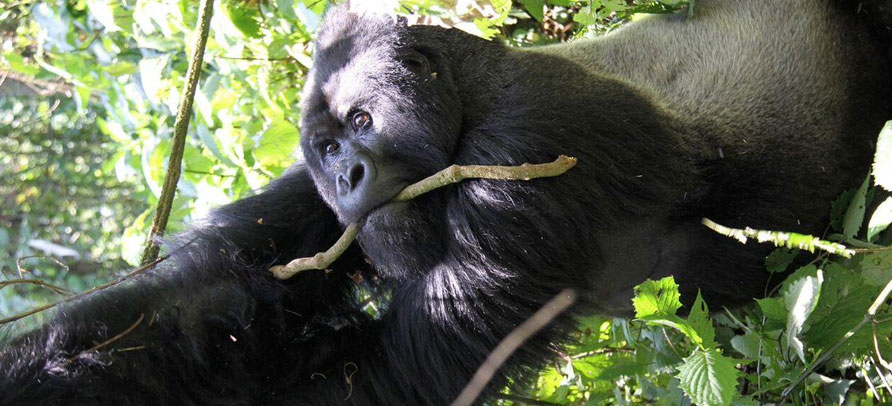
Rwanda Gorilla Trekking in Volcanoes
Why Choose All Budget Gorilla Safaris for Your 2026 Trip?
With over 15 years of on-the-ground experience, All Budget Gorilla Safaris bridge the gap between “luxury prices” and “accessible adventures.” We provide expert local drivers, 4×4 Land Cruisers equipped with pop-up roofs, and a deep understanding of the permit-securing process that can be daunting for international travelers.
Our 2026 Commitment:
-
Guaranteed Permits: We handle the RDB Irembo portal logistics 6 months in advance.
-
Sustainable Lodging: We partner with eco-lodges that employ 90% local staff from the Musanze district.
-
Custom Itineraries: From 1-day “Kigali Express” treks to 10-day “Primate and Big Five” circuits.
Would you like us to draft a custom 3-day itinerary for your 2026 gorilla trek, including a cost breakdown for permits and transport?
